
Appointments
Appointments
In-person appointments with Yurij Akbash and Ruslan Shipitsyn: functional assessment, manual therapy, work with soft tissue and with emotional tension. Appointments take place during international visits to cities and countries around the world.
In short
Book an appointmentWe look at the body as one connected system. Discomfort in one area does not always mean that the functional restriction sits there. The assessment takes in how you move, the state of muscles and joints, myofascial connections, posture, physical load, recovery and other factors.
Before any hands-on work
It matters to answer more than “where does it hurt?”: how the person moves, which movements are restricted, how load is distributed, whether there is muscular hypertonus and limited joint mobility, whether there is tingling, radiating pain or other neurological signs, and how physical load, lifestyle, recovery and stress affect the picture. That is what builds a fuller understanding of how the body is functioning.
What people come with most often
- pain in the neck, between the shoulder blades, in the mid-back and the low back;
- muscle spasm, hypertonus, a feeling of stiffness;
- restricted mobility and a changed movement pattern;
- headache that comes with neck tension;
- pain spreading into an arm or a leg, numbness and tingling;
- pain and fatigue after physical load.
How an appointment runs
History and screening, a functional assessment in movement, a neurological screen where needed, then hands-on work and a plan for what comes next. A first appointment takes about an hour, follow-ups 40–45 minutes. Between appointments we give two or three exercises that help the body hold what has changed.
How many appointments are needed
The answer comes after the first assessment and depends on the cause, not on a schedule. If there is no movement after three appointments, we change the approach or refer you to another specialist.
When you need to see a doctor first
Fever, unexplained weight loss, increasing numbness and weakness in the limbs, pain after a recent injury, a suspected fracture and marked neurological signs all call for a medical examination first.
In those cases manual therapy waits until contraindications have been ruled out. Where necessary the practitioner asks for a report from the relevant doctor and the results of further investigations: MRI, CT, ultrasound, X-ray or other procedures as medically indicated.
What we do
What an appointment covers
An appointment is not split into separate services: it is one full appointment in which the practitioner combines the strands of work that the assessment calls for.
-
Osteopathy and manual therapy
Work with the whole body as one system: soft tissue and mobilisation techniques, post-isometric relaxation and HVLA thrust manipulation where indicated.
More about the appointment -
Neurological screening
Checking sensation, muscle strength, reflexes and coordination to see whether the nervous system is involved and whether hands-on work is safe.
More about the appointment -
Massage and trigger point therapy
Sports, therapeutic and kinetic functional massage, work with fascia, trigger points and areas of raised tension.
More about the appointment -
Spine and joints
Functional assessment of mobility, muscular tension and the quality of movement — from the neck to the ankle.
More about the appointment -
Psychosomatics and working with stress
Bodywork for tension that comes with stress, anxiety and emotional overload.
Read more -
Physiotherapy devices
Treatment on the ASTAR PhysioGo 701I system: electrotherapy, ultrasound, laser, magnetic therapy — where indicated, as an addition to the manual work.
More about the appointment
Formats
How the appointments differ
The format is decided individually: a first appointment includes a full assessment of the whole body, and what follows is built around what was found and how recovery progresses.
-
First appointment
A full appointment includes the history, a comprehensive functional assessment, individual hands-on work and the practitioner's advice. Length: osteopathy and manual therapy — 40 minutes, massage — 60–90 minutes.
-
Follow-up appointment
Shorter than the first: the practitioner judges what has changed since the last session and adjusts the approach. Whether and how often it is needed follows the progress, not a schedule set in advance.
-
Visiting appointment
Appointments in various cities and countries during international visits. The way of working stays the same, but places in each location are limited. Booking opens in advance.
Cities and dates
How it works
An appointment step by step

-
01
First consultation
A detailed look at the complaints, how they began, past injuries, physical load and the treatments already tried.
-
02
Comprehensive functional assessment
Posture, gait, the biomechanics of spine and joints, muscle tone and the pattern of breathing. The body is treated as one connected system.
-
03
Individual hands-on work
A selection of osteopathic, manual and in-house techniques chosen from the findings, the patient's functional state and any contraindications.
-
04
Advice and next steps
Individual advice on movement, physical load and holding the result. Whether follow-up appointments are needed follows how the person progresses.
Tools
The practitioner's methods and tools
No method is applied by default: the set of techniques follows the findings of the assessment and the state of the patient.
-
Functional assessment
Assessing posture, movement biomechanics, the mobility of the spine and joints, muscle tone and compensations.
Tools
Functional assessment
Functional assessment means looking at how the body moves: posture, gait, range of movement in the joints and the regions of the spine, muscle tone, symmetry and breathing.
It is done both at rest and during movement: that shows which areas are restricted, which take on extra load and where compensations are forming.
The findings determine which techniques are appropriate in a given case and whether there are contraindications.
-
Manual muscle testing
Muscle tests and other functional checks: they show which muscles and areas are not taking part in the movement.
Tools
Manual muscle testing
Manual muscle testing is a set of checks in which the practitioner assesses how individual muscles and muscle groups respond to measured resistance.
It shows which muscles are working fully, which are switched out of the movement and which are overloaded, compensating for neighbouring structures.
It complements palpatory assessment and the assessment of mobility, and helps to choose the approach more precisely.
-
Soft tissue and myofascial techniques
Work with muscles, fascia and areas of raised tension where firmer techniques are unnecessary or contraindicated.
Tools
Soft tissue and myofascial techniques
Soft tissue and myofascial techniques are work with muscles, fascia and areas of raised tension without quick manipulation.
The practitioner uses pressure, lengthening and slow layer-by-layer work to reduce excess muscle tone and improve the elasticity of the tissue and its mobility.
These techniques are used where firmer work is not needed or is contraindicated: with marked pain, highly sensitive tissue, and in work with children, pregnant women and older patients.
-
Joint mobilisation
Gentle restoration of the range of movement in joints and regions of the spine.
Tools
Joint mobilisation
Mobilisation is a gentle repeated movement within a joint's physiological range, with no sharp thrust.
It is used to restore mobility gradually in joints and regions of the spine, reduce protective muscle tension and improve the quality of movement.
It is well tolerated and is often used where thrust manipulation is best avoided.
-
Post-isometric relaxation
A gentle technique: a short light contraction of the muscle followed by passive lengthening to release spasm and pain.
Tools
Post-isometric relaxation
Post-isometric relaxation is a gentle manual technique that combines a brief light contraction of a muscle with passive lengthening afterwards, to release spasm and pain.
The patient takes part: on the practitioner's word they produce a minimal effort for a few seconds, after which the muscle relaxes and is gently lengthened.
It is used with muscle spasm, chronic overload and restricted movement, including where firmer work would be painful.
-
Thrust manipulation (HVLA)
A quick, controlled movement of small amplitude. Used only where indicated and where there are no contraindications.
Tools
Thrust manipulation (HVLA)
HVLA is a quick, controlled movement of small amplitude within the physiological range of the joint. It is sometimes accompanied by a sound.
The sound is not the aim and does not in itself mean the technique "worked": what counts is the change in mobility, the easing of the restriction and how the patient responds afterwards.
Thrust manipulation is used only where indicated, after assessment and after contraindications have been ruled out.
-
Trigger point work
Finding and working with painful muscular knots, and mapping referred pain.
Tools
Trigger point work
Trigger points are painful knots in a muscle that can refer pain to other parts of the body.
The practitioner finds them by palpation and works on them with measured pressure, lengthening and soft tissue techniques.
Trigger point work is often combined with a look at load and with advice that helps keep the muscle from returning to its former overload.
-
Dry needling
Work with a needle on trigger points and dense areas of tissue.
What we teach on the seminarTools
Dry needling
Dry needling is work with a fine sterile needle on trigger points and dense areas of muscle tissue.
"Dry" means the needle delivers no medication: the effect is mechanical, through accurate placement in the tense part of the muscle.
It is used with chronic muscular overload and trigger pain, where indicated and after contraindications have been ruled out. Single-use sterile needles are used.
-
IASTM (instrument-assisted soft tissue mobilisation)
Work with a blade — an instrument with a smooth rounded edge — over the soft tissue, with nothing punctured and nothing cut.
More about the methodTools
IASTM (instrument-assisted soft tissue mobilisation)
IASTM stands for Instrument-Assisted Soft Tissue Mobilization. The practitioner moves the smooth rounded edge of the instrument over the skin, varying the direction, the contact area and the pressure. Nothing is punctured and nothing is cut.
The aim is to reduce pain on movement and help you move on to exercise and to your usual activity. So before the work we record a baseline (how high the arm lifts, say, or the distance in the ankle test), and afterwards we repeat the same movement under the same conditions and compare.
There is no need to endure sharp pain: tell us straight away about burning, numbness or pain that is building. The method is not used over an open wound, a fresh bruise, an unhealed fracture and in a number of other situations — the practitioner goes through these beforehand.
-
Sports taping
An elastic strip on the skin over a muscle or next to a joint: gentle functional support that keeps the movement.
More about the methodTools
Sports taping
Elastic sports tape is an adhesive strip applied in a pattern chosen in advance. It stretches with the body and lets you move within a comfortable range, unlike rigid fixation.
Tape does not reduce a joint, does not knit ligaments and does not "treat a herniated disc". It gives external elastic support to a chosen area and can make a particular movement more comfortable — as an addition to the main plan.
The pattern is chosen for the task: before and after the application the practitioner compares the same safe movement. If the tape does not make it more comfortable, the pattern is reconsidered. It is not applied to broken or irritated skin or where there is an adhesive allergy.
-
Visceral techniques
Gentle work with the internal organs and their links to the muscles, where the assessment makes it appropriate.
Tools
Visceral techniques
Visceral techniques are gentle work with the mobility of the internal organs and their ligaments, and with their links to the muscles, the diaphragm and the spine.
The contact is superficial and slow, without pain or sudden movement.
These techniques are used selectively, where the assessment makes them appropriate, and do not replace investigation and treatment by the relevant doctor.
-
Psychosomatics and working with stress
Bodywork for tension that comes with stress, anxiety and emotional overload.
Read moreTools
Psychosomatics and working with stress
Prolonged stress, anxiety and emotional overload change muscle tone, breathing and sleep — the body starts to move differently, overloaded areas appear and tension settles in.
At an appointment the practitioner works with the body: muscular tension, mobility and breathing, taking account of the nervous system and the balance of load and recovery.
This is not psychotherapy and does not replace the help of a doctor or psychologist: where needed the practitioner will recommend the appropriate specialist.
Physiotherapy devices
Physiotherapy at an appointment
Where indicated, an appointment is supplemented with device-based physiotherapy on the multifunctional ASTAR PhysioGo 701I system. Treatments are not given to everyone and not by default: the method is chosen after assessment and after checking contraindications, and the foundation of recovery remains manual work, movement and load.
-
Electrotherapy
Controlled electrical impulses: TENS, interferential, diadynamic, galvanic and microcurrent modes, neuromuscular stimulation.
Physiotherapy devices
Electrotherapy
Controlled impulses are delivered through skin electrodes, acting on sensory nerve fibres or producing a muscle contraction.
It is used for short-term symptomatic pain relief and as a supporting method in movement rehabilitation — for instance with muscle weakness after immobilisation.
It is not a primary treatment: for non-specific low back pain, international guidance (NICE) advises against prescribing TENS and interferential currents routinely.
-
Ultrasound therapy
Therapeutic acoustic waves: 1 and 3.5 MHz, continuous and pulsed modes, 1 and 4 cm² heads.
Physiotherapy devices
Ultrasound therapy
An ultrasound head with coupling gel transmits high-frequency vibration into the tissue; depending on the settings the effect may be thermal or non-thermal.
The method is treated as an addition in particular rehabilitation situations.
Therapeutic ultrasound is not diagnostic ultrasound: it does not show the internal organs. The evidence for many conditions is limited, so we make no promises about rebuilding cartilage or discs.
-
Laser therapy (photobiomodulation)
Red and infrared light (660 and 808 nm) through point, cluster or scanning applicators.
Physiotherapy devices
Laser therapy (photobiomodulation)
Light of a particular wavelength is applied to the tissue in the area of discomfort. The result depends on the diagnosis, the wavelength, the power, the dose and the area treated.
For some musculoskeletal conditions photobiomodulation is being studied as a supporting method, but it does not guarantee that pain or inflammation will go.
Treatment is given with eye protection and in line with laser safety rules.
-
Magnetic therapy
A magnetic field with adjustable parameters: up to 10 mT, frequencies of 2–120 Hz, CPE1 and CPE2 applicators.
Physiotherapy devices
Magnetic therapy
The device produces an adjustable magnetic field; the waveform, frequency and applicator placement are selected.
It is used as a supporting method in particular conditions.
The clinical evidence for magnetic therapy in many conditions is limited or conflicting, so we do not present it as a universal treatment for arthritis, herniation or inflammation. A magnetic field is dangerous with implanted electronic devices.
-
Combination therapy and electrodiagnostics
Ultrasound and electrotherapy together in the permitted modes, plus assessment of electrical excitability.
Physiotherapy devices
Combination therapy and electrodiagnostics
In the modes the manufacturer provides for, ultrasound and electrotherapy can be applied at the same time. Two methods are not necessarily better than one: the combination is chosen on indication and on safety grounds.
Separately, the device can assess the electrical excitability of the neuromuscular structures — rheobase, chronaxie and accommodation.
This is a rough assessment within an appointment; it does not replace nerve conduction studies or a neurologist's opinion.
-
When a treatment is not given
A pacemaker and other electronic implants, pregnancy, suspected tumour or thrombosis, infection and fever, skin damage.
Physiotherapy devices
When a treatment is not given
Before any device treatment the practitioner checks for contraindications: implanted electronic devices (pacemaker, defibrillator, neurostimulator), pregnancy, suspected tumour or thrombosis, active infection and fever, altered sensation, skin damage, a tendency to bleeding, metal implants, epilepsy.
The list is not exhaustive and differs for each method — it is checked against the device instructions and the particular patient.
With a hot, swollen joint, fever, rapidly growing swelling, severe unexplained pain or suspected thrombosis the treatment waits: medical assessment comes first.
Practitioners
Who holds the appointments
-
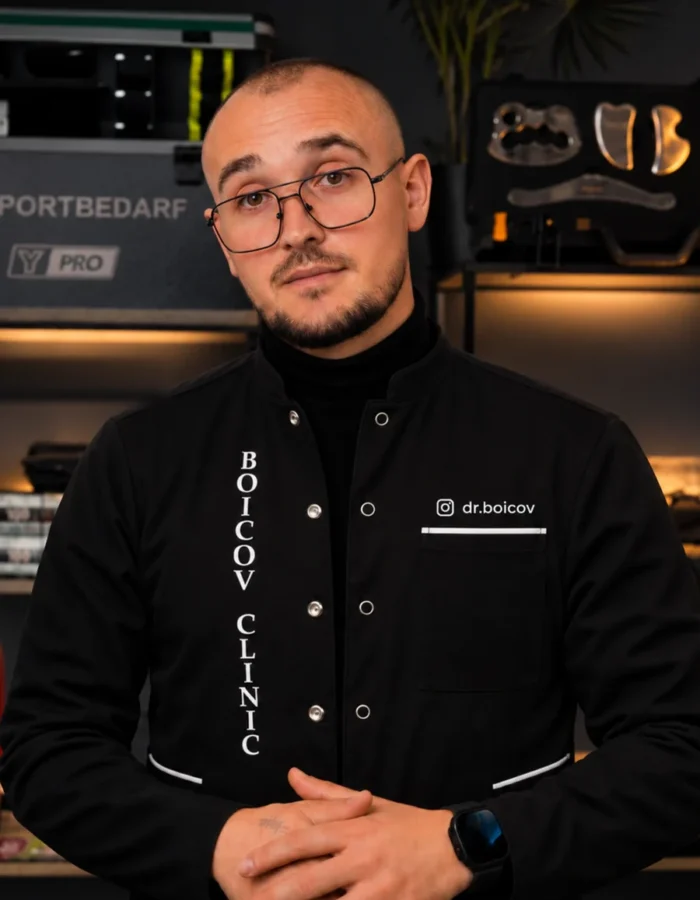
Yurij Akbash
Osteopath, manual therapist
Known professionally as Dr. Boicov. He holds in-person appointments and visiting programmes internationally and teaches manual therapy and HVLA thrust techniques. His work rests on anatomy, biomechanics and the functional assessment of the musculoskeletal system.
- 15 years of practice
- Appointments in 20+ countries
- 120,000+ followers
Instagram YouTube TikTok Facebook
Osteopath, manual therapist
Yurij Akbash
Osteopath and manual therapist, known professionally as Dr. Boicov. Co-founder of BOICOV THRUST ACADEMY.
He holds in-person appointments and visiting programmes internationally and teaches manual therapy and HVLA thrust techniques.
His work rests on anatomy, biomechanics and the functional assessment of the musculoskeletal system: he looks at the body as one system, not only at the painful area.
15 years of practice, appointments in more than 20 countries, an audience of over 120,000 followers.
-

Ruslan Shipitsyn
Trauma and orthopaedic surgeon, manual therapist, osteopath D.O., psychotherapist
A physician. Residency in trauma and orthopaedics at the Priorov Centre, manual therapy at RUDN University, osteopathy (D.O.) at the Russian Higher School of Osteopathic Medicine, residency in psychotherapy. More than 15 years in practice. He combines manual therapy and osteopathy with evidence-based medicine and works with dry needling and acupuncture.
- 15 years of practice
- Work with children, pregnant women and older patients
- Psychotherapy and psychosomatics
Website Instagram YouTube Telegram
Trauma and orthopaedic surgeon, manual therapist, osteopath D.O., psychotherapist
Ruslan Shipitsyn
A physician and co-founder of the academy. Trauma and orthopaedic surgeon, manual therapist, osteopath D.O., psychotherapist, acupuncturist.
Education: general medicine, residency in trauma and orthopaedics at the Priorov Centre, manual therapy at RUDN University, retraining and the degree of Doctor of Osteopathy (D.O.) at the Russian Higher School of Osteopathic Medicine, residency in psychotherapy.
More than 15 years in practice, teaching since 2021. He combines manual therapy and osteopathy with evidence-based medicine and works with dry needling and acupuncture.
He sees adults and children, including pregnant women — after agreement with the relevant doctor.
-
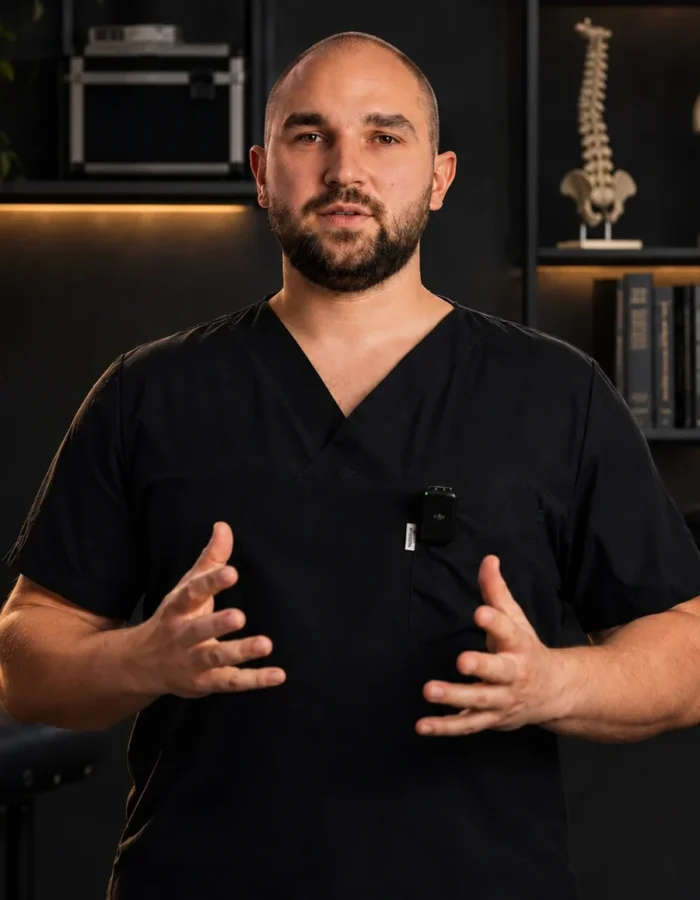
Georgij Bogatu
Massage therapist, specialist in trigger point work
A professional massage therapist with five years of hands-on experience. Classical, therapeutic, kinetic functional and sports massage, and trigger point therapy. He works with muscular tension, back and neck pain, restricted movement and the aftermath of physical overload.
- 5 years of practice
- Classical and sports massage
- Trigger point therapy
Massage therapist, specialist in trigger point work
Georgij Bogatu
My name is Georgij Bogatu. I am a professional massage therapist with five years of hands-on experience. I have taken certified training and individual masterclasses with leading practitioners in the Republic of Moldova, and I keep developing my knowledge and technique.
I specialise in classical, therapeutic, kinetic functional and sports massage, and in trigger point therapy.
I work with muscular tension, back and neck pain, restricted movement and the aftermath of physical overload.
At the heart of my approach are an individual assessment, careful work with the body and the choice of techniques that help a person feel better, move more freely and let go of muscular tension.
Next visits
- Munich 19 October — 10 November
- Frankfurt 12 November — 4 December
- Düsseldorf 7 December — 29 December
Places in each period are limited — booking opens in advance. Book a consultation
Geography
Where we work
The list of destinations changes through the year. Current cities and dates are published as booking opens.
-
Moldova
Head office
Marketing, organising the international visits, client care and project management.
-
Europe
Visiting appointments
Regular visits by the practitioners to cities across Europe, by prior booking.
-
Worldwide
International visits
Individual appointments, teaching events and professional projects in various countries.
Current cities and dates of appointments and seminars are published as booking opens.
Тело работает как единая система. Боль в одном месте почти всегда связана с тем, что происходит в другом.
Real cases
Stories from our patients
-
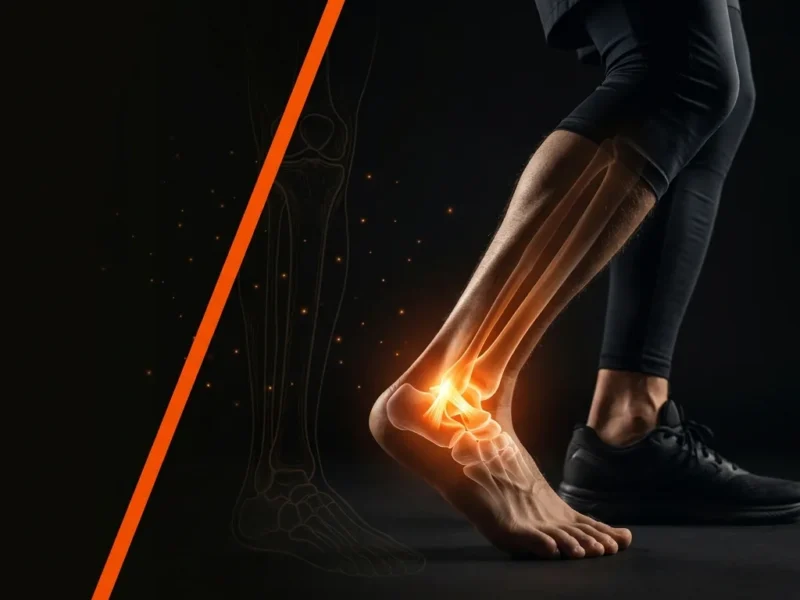 One appointment that helped a marathon runner return to sport
-
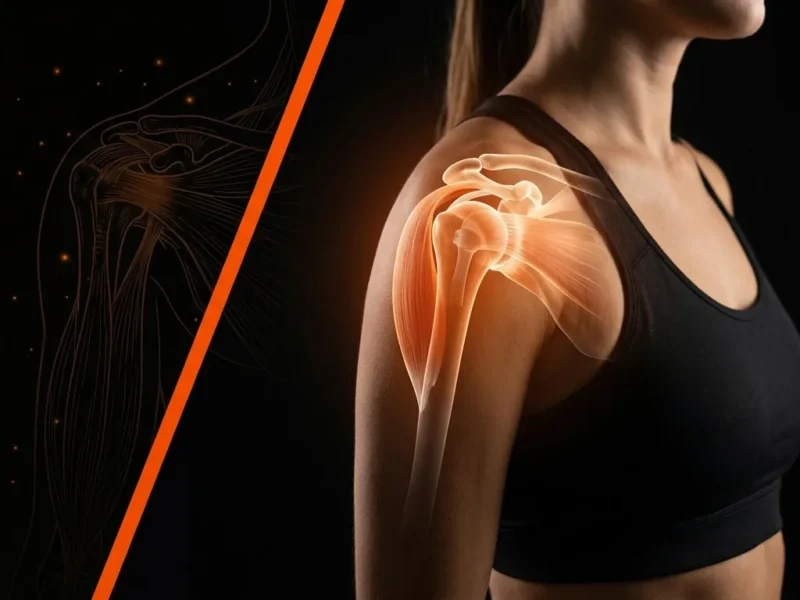 A shoulder that stopped hurting after the first appointment
-
 When the cause was not where everyone was looking
-
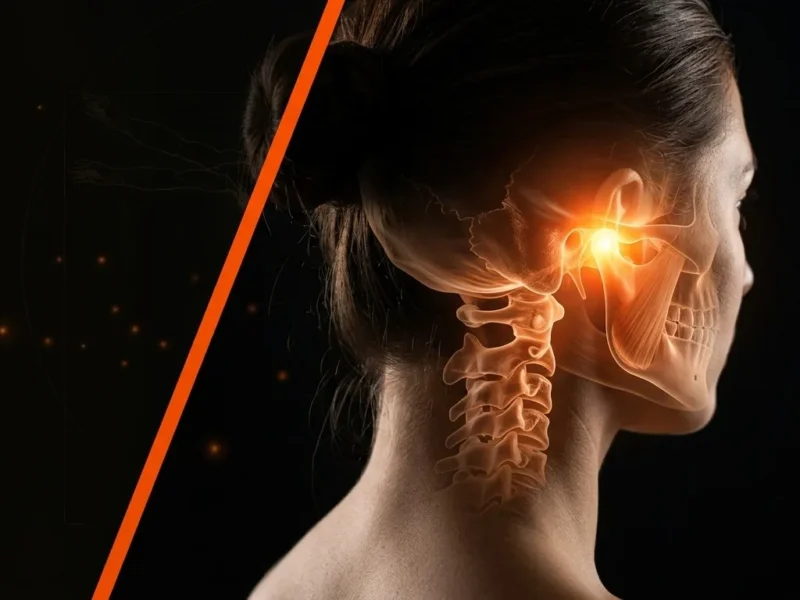 Headaches since childhood and a cause nobody could find
-
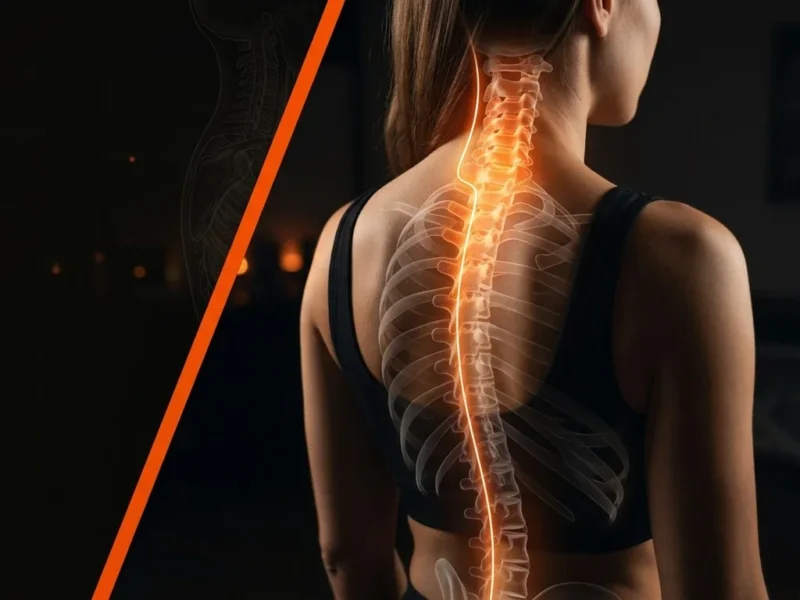 Neck pain, while the real problem sat somewhere else
-
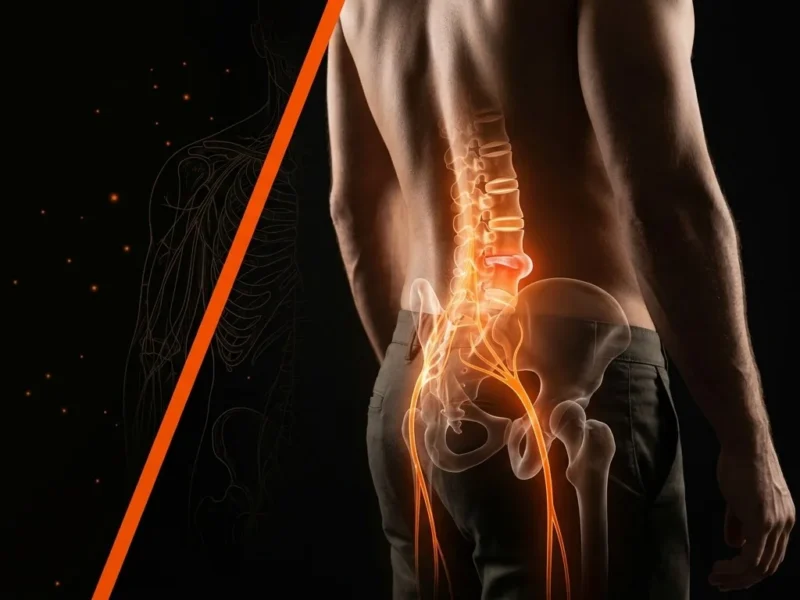 A 6 mm herniation and an offer of surgery. After the appointment he could walk
Common questions
Common questions
It starts with a conversation and the history, then a comprehensive functional assessment: posture, gait, the mobility of the spine and joints, muscle tone. After that the practitioner chooses techniques for the particular case and gives advice.
Some patients notice the first changes after a single appointment. But it is individual: sometimes one visit is enough, sometimes staged work over time is needed. The number follows the patient's condition, the nature of the problem and how recovery progresses, not a schedule set in advance.
During international visits to cities and countries. Current cities, dates and booking terms are published as booking opens.
Contact
Book an appointment
Tell us what is troubling you and which city suits you. The team will let you know the next dates and the format of the appointment.
- Phone+49 1521 5307228
- E-mailinfo@boicov.clinic
- Head office Кишинёв, Молдова Organisational and marketing office. Patients are not seen here.
- HoursПн–Пт 10:00–18:00